How to Keep Fresh Herbs Fresh for Weeks
I used to buy a big bunch of parsley, use a handful in a soup, and then forget the rest in the fridge. A week later the bag would hold black slime and a smell I did not want to know about. It happened so often that I stopped buying herbs for a while, which was a shame, because a handful of parsley or basil makes plain food taste like proper cooking. The waste annoyed me more than the money — I was throwing away flavour I had paid for.
Then I learned that herbs are plants, and you keep them fresh the same way you keep a plant alive: soft herbs want water, woody herbs want things dry. That idea changed everything, and now a bunch of parsley lasts me weeks instead of days. This guide covers both kinds, plus freezing and drying for the herbs you cannot use in time.
Reading time: 5 minutes | Skill level: beginner | Tools: a jar or glass, paper towels, freezer bags, scissors
Watch: How to Keep Fresh Herbs Fresh for Weeks
Know Your Two Types of Herbs
Herbs come in two families, and they want opposite things. Soft herbs — parsley, cilantro, basil, dill and mint — have tender leaves and thin stems, and they wilt fast without water. Woody herbs — rosemary, thyme, sage and bay — have stiff stems and tough little leaves, and they hate being wet. Most storage failures happen because people treat both kinds the same way. Sort your herbs into these two groups as soon as you get home.
The Glass of Water Trick
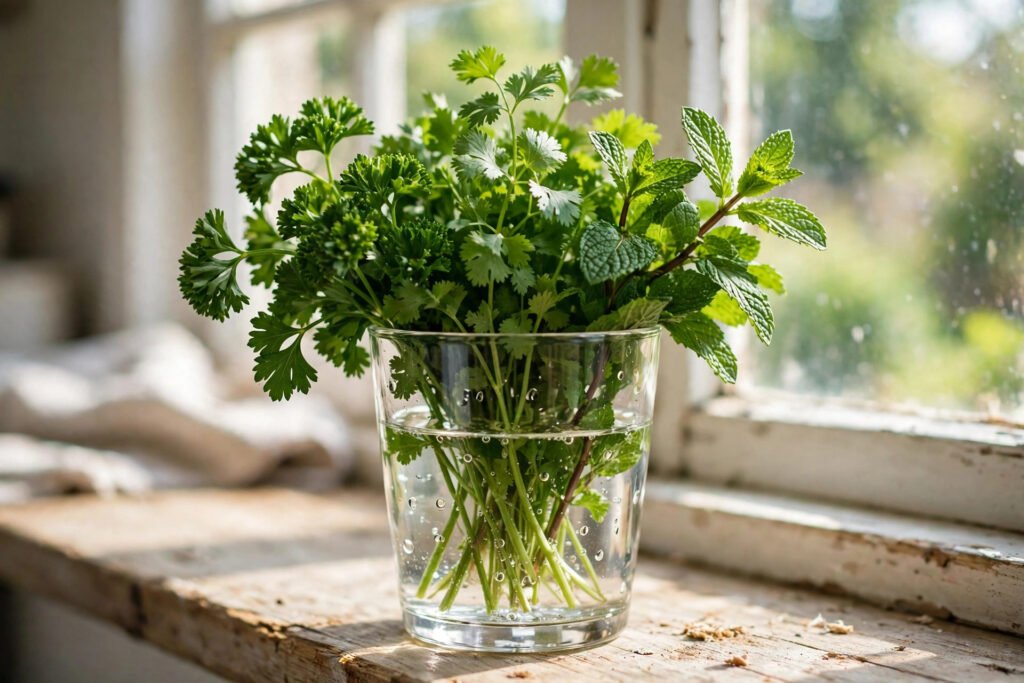
Treat soft herbs like a bunch of flowers. Trim a little off the bottom of the stems, stand the bunch in a jar with an inch or two of water, and put a loose plastic bag over the top like a tent. Keep the jar in the fridge, and the herbs will stay fresh for two to three weeks — I have had parsley last a month. Change the water every few days. Basil is the exception: it hates the cold, so keep its jar on the counter instead, away from direct sun.
Wrap the Woody Ones Dry
Woody herbs want things dry. Wrap a sprig of rosemary or thyme loosely in a dry paper towel, put it in a bag or a container, and squeeze the air out before you close it. The towel soaks up the moisture that causes mould, and the bag keeps the herbs from drying out completely. Check the towel after a few days: if it is damp, swap it for a dry one. Stored like this, woody herbs easily last three weeks.
Do Not Wash Until You Use Them
Do not wash herbs until you are about to use them. Water is the enemy here: wet leaves rot faster, go slimy sooner, and lose flavour in the fridge. Shake off any soil when you bring them home, and wash them only when they are going into the pot — then pat them dry in a clean tea towel. This one habit probably saves more herbs than anything else. A damp bunch in a bag has one day left; a dry bunch kept properly has weeks.
Freeze Them in Oil
If you still have more herbs than you can use, freeze them. Chop soft herbs, pack them into an ice cube tray, and cover them with olive oil. Freeze the tray, then tip the cubes into a labelled bag. Each cube is about a tablespoon of herbs in oil, ready to drop into a pan for pasta sauce, soup or a stir-fry. They will not work in a salad, but for cooking they are nearly as good as fresh, and they keep for months.
Dry What You Cannot Use
Woody herbs dry beautifully, and drying uses up the surplus you cannot cook in time. Tie rosemary, thyme or sage into small bunches and hang them upside down in a dark, airy spot — a cupboard or a corner away from the window. They take a week or two to dry fully, when the leaves feel crisp and crumble between your fingers. Strip the leaves into a jar, label it with the name and the date, and keep it in a cool dark cupboard. Home-dried herbs taste far better than the dusty jars at the shop.
Use the Stems Too
One last thing: stop throwing the stems away. The stems of parsley and cilantro are full of flavour — often more than the leaves — and they are perfect in places where the leaves would wilt. Chop them into stocks, soups, sauces and dressings, or drop a tied bunch into a simmering pot and fish it out at the end. Tender basil stems can go in too. It is free flavour you have been composting.
Tips
A few last habits. Buy small bunches more often rather than one giant bunch you cannot finish. Check your herbs every few days and pick out any leaves that have gone yellow or slimy, because one bad leaf spreads the rot. If a herb smells off or feels slimy, throw it out — a bunch of parsley is never worth a bad stomach. Keep a note of what worked: I now know parsley lasts a month in water and mint prefers the freezer.
Fresh herbs are not a luxury and they are not meant to be wasted. A bunch of parsley in a jar of water, a sprig of rosemary in a paper towel, a tray of herb cubes in the freezer — small habits that add up. Once you have them, you will buy herbs without guilt, use what you need, and still have green, fragrant leaves waiting for you a week later. It is a small thing, but it makes cooking feel easy — and a little bit like magic.