How to Choose Fresh Vegetables at the Market
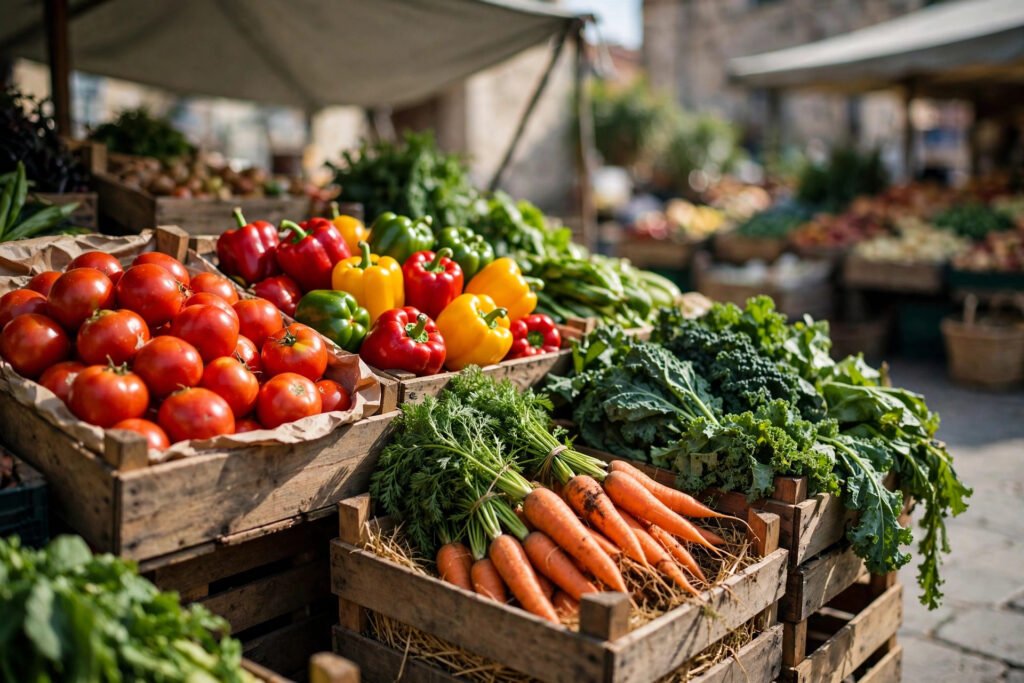
There is nothing quite like a Saturday morning at the market. The stalls are piled high, the colours are almost too bright to believe, and for about five minutes I feel like a person who really knows what she is doing. Then I pick up a tomato and realise I have no idea whether it is the good one or the one that will go soft and sad by Tuesday. I have bought my fair share of limp lettuce and woody carrots over the years, and I have learned that choosing vegetables is a skill — one you build with your hands and eyes, not with a shopping list.
The good news is that it is a simple skill, and it starts with one rule: use your senses. Look at it, pick it up, feel it, smell it. A fresh vegetable will tell you it is fresh if you know what to check, and a tired one will tell you that too. This guide walks through what to look for, stall by stall, so you can bring home vegetables that actually taste like something.
Reading time: about 5 minutes | Skill level: beginner | Tools: a shopping bag, your eyes and your hands
Watch: How to Choose Fresh Vegetables at the Market
Start with the Season
Buy what is in season and you will rarely go wrong. In-season vegetables are cheaper, they taste better, and they last longer in the fridge, because they were picked recently and have not travelled far. If something is cheap and piled high on every stall, it is in season. If it is expensive and there is only a sad little box of it, it is not. I plan my week around what looks good at the market, not the other way around — it saves money and the food tastes like it should.
Look at the Colour
Colour is the first thing to check. Fresh vegetables are bright and deep in colour — dark green leaves, rich red tomatoes, vivid orange carrots. Fading, yellowing or brown spots are the signs of age, and a dull surface usually means the flavour has faded with it. A little dirt is fine, by the way; it washes off. But a vegetable that looks grey or washed out will taste the way it looks, so leave it on the stall.
Feel the Weight and Firmness
Pick it up. A good vegetable feels heavy for its size, because that weight is water and juice inside. A cucumber that feels light is probably hollow and bitter, and a tomato that feels light is dry inside. Give it a gentle squeeze: it should feel firm, not soft or bendy, and there should be no mushy spots. Root vegetables should feel solid all the way through. If it gives way under your thumb, it is past its best.
Check the Leaves and Stems
Leaves and stems tell the truth about a vegetable. They should be crisp and bright, not wilted, yellowed or slimy. Carrot tops should look fresh and green, celery stalks should snap rather than bend, and lettuce should feel cold and crunchy, not soft around the edges. If the leaves look tired, the vegetable is tired too, even if the main part still looks all right. I always check the leaves first, because they age fastest and they never lie.
Smell It
Smell is the test people forget, and it is one of the best. A fresh vegetable smells like itself — a tomato smells faintly green and sweet, a melon smells fragrant at the stem end, herbs smell strong when you rub a leaf. If something smells sour, musty or like nothing at all, walk past it. I learned this the hard way with a bag of mushrooms that looked fine and smelled like a damp cellar. They went straight in the bin, and so did the money.
Talk to the Stallholder
The person behind the stall knows more about their vegetables than anyone else in the market, and most of them love to be asked. Ask what is best today, what came in this morning, and how they would cook it. They will tell you honestly, because a happy customer comes back next week. I have a few stalls I return to every time now, and they save the good stuff for regulars. It takes a minute of conversation, and it is worth more than any guide.
Know What to Skip
Some things are not worth buying however cheap they are. Skip pre-cut vegetables that have gone slimy in the bag, potatoes with green patches or long sprouts, and anything with mould on it, even a small spot — mould spreads further than you can see. Soft tomatoes are fine if you are making sauce, but not for a salad. And if a whole tray looks wet or smells off, do not dig through it hoping to find a good one. Walk to the next stall instead.
Tips
A few habits make market shopping easier. Go early for the best pick, but go late for the bargains — stalls often drop their prices in the last hour. Bring your own bags so nothing gets squashed, and do not buy more than you will use in a few days, however tempting it looks. As soon as you get home, store things properly: leafy greens in a bag in the fridge, potatoes and onions in a cool dark place, tomatoes on the counter, never in the fridge.
Choosing vegetables is not about having a perfect eye. It is about slowing down for thirty seconds at each stall, looking, feeling, smelling, and trusting what you find. Do that for a few weeks and it becomes second nature — you will find yourself reaching past the sad specimens without even thinking about it. The reward is simple: vegetables that taste like vegetables, meals that taste better, and a market trip that feels less like a chore and more like the best part of the week.